What Is Vibe Coding? The meaning, origin & how it works
Vibe coding is building software by telling an AI what you want in plain English and letting it write the code. Here's exactly what the term means, who coined it, how it works in practice, and when it's a great idea (and when it isn't).

Vibe coding is a way of creating software where you describe what you want in everyday language and an AI model writes the code for you. Instead of typing every line yourself, you give instructions like "add a signup form with email validation" or "make the buttons bigger on mobile", run the result, and keep prompting until it works. The term was coined by AI researcher Andrej Karpathy in February 2025 and became so widespread that Collins Dictionary named it its Word of the Year for 2025.
vibe codingnoun
/vaɪb ˈkoʊdɪŋ/ · also: vibecoding, vibe code (verb), vibe coder (person)- Building software by describing what you want to an AI in natural language and accepting the code it generates, judging the result by whether it works rather than by reading the code.
- Loosely: any software development where AI writes most of the code from plain-English prompts.
- Meaning: telling an AI what to build in plain English instead of writing code by hand.
- Origin: coined by Andrej Karpathy in a post on X on February 2, 2025.
- Recognition: Collins Dictionary Word of the Year 2025; added to Merriam-Webster in 2026.
- Popular tools: Claude, Claude Code, Cursor, Lovable, Bolt, Replit, v0, GitHub Copilot.
- Best for: prototypes, personal tools, internal apps and learning. Be careful with: security, payments and anything handling personal data.
What does vibe coding mean?
At its core, vibe coding means you work at the level of intent instead of syntax. You say what you want the software to do, the AI produces the code, and you check the result by using it: does the page look right, does the button work, does the game feel fun? If not, you describe the problem and the AI tries again.
The "vibe" part is the important bit. In its original sense, vibe coding means going with the flow: you don't carefully read every line the AI writes. You accept the changes, see if things work, paste in any error messages, and keep going. It's closer to directing than to typing.
Here's the difference in one example. A traditional developer might write a regular expression to validate email addresses. A vibe coder types a sentence:
// Traditional coding: you write the logic
const isEmail = s => /^[^\s@]+@[^\s@]+\.[^\s@]+$/.test(s);

// Vibe coding: you describe the outcome
"Add email validation to the signup form and show a friendly
error under the field if the address looks wrong."
Both get you a working form. The second one is how millions of people, including many who have never written code, now build websites, apps, games and automations.
Where the term came from: Karpathy's post
The phrase comes from Andrej Karpathy, a co-founder of OpenAI and former director of AI at Tesla. On February 2, 2025, he posted on X about "a new kind of coding" he called vibe coding, where you give in to the vibes and, in his words, "forget that the code even exists."
He described talking to an AI coding tool with his voice, accepting every suggested change without reading the diffs, pasting error messages back in without comment, and letting the code grow beyond what he fully understood. He was clear that this was fine for "throwaway weekend projects", and that it worked because the AI tools had become good enough.
The idea spread fast because it named something lots of people were already doing. Within weeks, "vibe coding" was everywhere: in startup pitches, job posts, YouTube tutorials and arguments between developers.
From slang to dictionary word
In March 2025, Y Combinator CEO Garry Tan said that for about a quarter of the startups in YC's current batch, 95% of the code had been written by AI. In November 2025, Collins Dictionary named "vibe coding" its Word of the Year, defining it as using AI prompted by natural language to help write computer code. And in its 2026 update, Merriam-Webster added "vibe coding", defining it as the act or practice of using an AI system to generate computer code. Not bad for a phrase that started as one post.
How vibe coding works, step by step
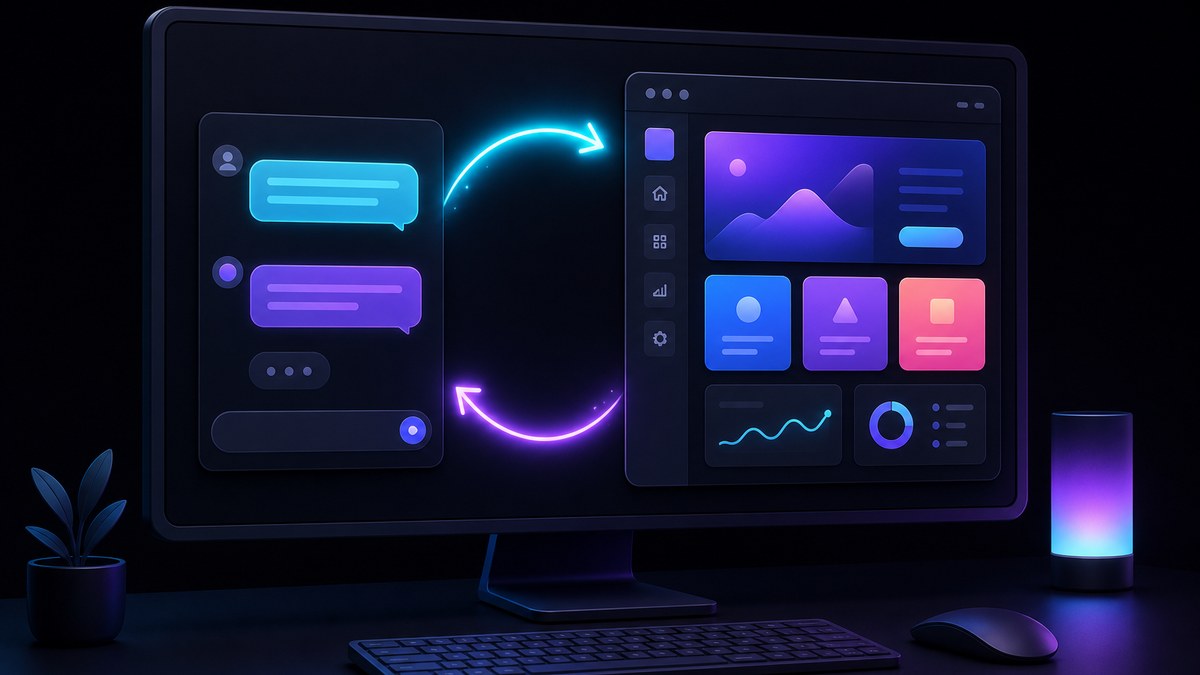
Every vibe coding session follows the same simple loop, whichever tool you use:
- Describe the goal. Start with what you want and who it's for: "A habit tracker for runners that shows my weekly streak."
- Let the AI generate. The tool writes the files, installs what it needs, and often shows a live preview.
- Run it and react. Click around. Does it do what you meant? Judge by the result, not the code.
- Prompt the fix. "The streak resets when I refresh. Save it so it remembers." Paste any error messages straight in.
- Repeat and ship. Keep iterating in small steps until it's good enough to share or deploy.
Want to feel this loop in five seconds? Try Prompt → App in our Vibe Arcade. Type something like "a pink 5 minute focus timer" and a working timer appears. It's a tiny rule-based demo, but it captures the idea perfectly.
Play with vibe-coded apps
Nine free games and mini apps, each built from a plain-English prompt. A space shooter, boxing, a maze chase, snake, 2048, a drum machine and more.
Vibe coding vs traditional coding
Vibe coding doesn't replace programming knowledge. It changes where your effort goes. Here's how the two compare:
| Traditional coding | Vibe coding | |
|---|---|---|
| You write | The code, line by line | Instructions in plain English |
| Skill needed to start | A programming language and tools | Clear thinking and good descriptions |
| Speed to first version | Days to weeks | Minutes to hours |
| How you check work | Read, test and review the code | Use the result; ask the AI to fix issues |
| Understanding of the code | Deep | Often partial |
| Best for | Complex, long-lived, high-stakes systems | Prototypes, personal tools, MVPs, learning |
| Main risk | Slow delivery | Hidden bugs and security holes |
We go much deeper in vibe coding vs traditional coding: which should you learn?
Is all AI-assisted coding "vibe coding"?
No, and this distinction matters. Developer and writer Simon Willison argued in March 2025 that not all AI-assisted programming is vibe coding. If you review, test and understand everything the AI writes, you're doing AI-assisted software engineering. Vibe coding, in the strict sense, is when you don't review the code and judge it only by whether it works. His personal rule: don't commit code you couldn't explain to someone else.
In everyday use, people say "vibe coding" for both. A useful way to think about it is as a spectrum: pure vibes for weekend projects at one end, careful AI-assisted engineering for production software at the other. Good builders know where on that line each project belongs.
The best vibe coding tools
You can vibe code with a general AI chat assistant, but purpose-built tools make it much smoother. These are the most widely used:
Claude
Anthropic's AI model. Strong at writing and explaining code, and it can build small interactive apps right in the chat.
Claude Code
Anthropic's agent that works in your terminal and codebase: reads files, makes multi-file changes and runs commands for you.
Cursor
A code editor built around AI. Chat with your whole project, accept edits and let its agent handle bigger tasks.
Lovable
Describe a web app and get a working full-stack version with a live preview. Popular with non-developers and founders.
Bolt.new
Builds and runs full web apps in the browser from a prompt, with no local setup.
Replit
Write, run and host apps in the browser, with an AI agent that can build projects from a description.
v0 by Vercel
Generates polished interface components and pages from prompts, ready to drop into a web project.
GitHub Copilot
AI suggestions and chat inside popular editors, from autocomplete to agent-style changes.
Not sure which to pick? If you've never coded, start with an app builder like Lovable or Bolt. If you want to learn as you go, try Cursor or Claude. If you already work in a codebase, an agent like Claude Code fits right in. See our tools directory for more.
What can you build with vibe coding?
More than most people expect. Common vibe coding projects include:
- Personal tools: budget trackers, habit trackers, recipe organizers, workout logs.
- Websites and landing pages: portfolios, event pages, waitlist pages for a new idea.
- Prototypes and MVPs: a clickable first version of a startup idea to show users or investors.
- Internal business tools: dashboards, simple CRMs, quote calculators, booking forms.
- Games and toys: browser games, quizzes, generative art. Every game in our Vibe Arcade started as a one-sentence prompt.
- Automations: scripts that rename files, clean spreadsheets or connect apps together.
Need inspiration? Spin the Vibe Machine idea generator for a random audience, problem and tool combination.
The risks: when vibe coding goes wrong

Vibe coding's biggest strength, not needing to read the code, is also its biggest weakness. The main risks:
- Security holes. Veracode's 2025 GenAI Code Security Report tested over 100 AI models on 80 coding tasks and found AI-generated code introduced security flaws in 45% of cases. If your app stores passwords, payments or personal data, that's a serious problem.
- Bugs you can't see. Code can look fine in a quick test and fail with real users, odd inputs or lots of traffic.
- Hard-to-maintain code. When nobody understands the code, every change gets riskier as the project grows.
- Leaked secrets. It's easy to accidentally expose API keys or database credentials in code an AI wrote for you.
- Licensing and data questions. Check what you're allowed to use and where your data goes, especially at work.
Vibe code freely for prototypes, learning and personal projects. Before anything goes live with real users, money or personal data, have the code reviewed, ask the AI to audit it for security issues, and add tests.
How to start vibe coding today
- Pick one small idea. A tip calculator, a to-do list, a page for your side project. Small wins teach fastest.
- Choose a beginner-friendly tool. Lovable, Bolt, Replit or a chat assistant like Claude.
- Write a clear first prompt. Say who it's for, what it should do, and how it should look.
- Build in small steps. One feature per prompt. Test after each change.
- Paste errors back in. Copy the exact error message and ask the AI to explain and fix it.
- Save working versions. When something works, save or commit it before the next big change.
- Learn as you go. Ask "explain what this code does" regularly. It's the fastest way to level up.
Our step-by-step guide on how to start vibe coding walks through your first project, and these vibe coding prompts that actually work will save you hours. Ready to test yourself? Take the two-minute vibe coding challenge.
Is vibe coding a real skill?
Yes. The best vibe coders aren't the fastest typists; they're the clearest thinkers. They break problems into small pieces, describe outcomes precisely, notice when something is subtly wrong, and know when to slow down and review. Those skills are becoming valuable in their own right, which is why vibe coding now shows up in job descriptions as well as hobby projects.
Frequently asked questions
What is the meaning of vibe coding?
Vibe coding means building software by describing what you want to an AI in plain English and letting it write the code. You judge the result by whether it works and keep prompting to fix or improve it, rather than writing or reading every line yourself.
Who coined the term vibe coding?
AI researcher Andrej Karpathy, a co-founder of OpenAI and former director of AI at Tesla, coined "vibe coding" in a post on X on February 2, 2025.
Is vibe coding a real word?
Yes. Collins Dictionary named "vibe coding" its Word of the Year for 2025, and Merriam-Webster added it to its dictionary in 2026, defining it as using an AI system to generate computer code.
Do you need to know how to code to vibe code?
No. Many people build working apps with no coding background using tools like Lovable, Bolt or Replit. Knowing some basics helps you spot problems, give better instructions and keep projects secure as they grow.
What is the best tool for vibe coding?
It depends on you. Beginners often start with app builders like Lovable or Bolt.new. People who want to learn as they build like Cursor or Claude. Developers working in existing codebases often use agents like Claude Code or GitHub Copilot.
Is vibe coding safe?
It's safe for prototypes, learning and personal projects. For apps that handle logins, payments or personal data, AI-generated code should be reviewed and tested; Veracode's 2025 research found security flaws in 45% of AI-generated code samples tested.
Is vibe coding the same as AI-assisted programming?
Not exactly. Strictly, vibe coding means accepting AI code without reviewing it. AI-assisted programming means using AI while still reading, testing and understanding the code. In everyday speech, people often use "vibe coding" for both.
Will vibe coding replace programmers?
It's changing what programmers spend time on rather than removing the need for them. Complex, secure, long-lived software still needs people who understand code deeply, and those people are often the most effective vibe coders.
What is a vibe coder?
A vibe coder is someone who builds software mainly by prompting AI tools in natural language: a founder building an MVP, a marketer making internal tools, or a developer moving faster with AI.
How do I write good vibe coding prompts?
Be specific about the goal, the user and the look. Ask for one change at a time, paste exact error messages, and describe what you expected versus what happened. See our guide to prompts that actually work.
Keep reading
Sources
- Merriam-Webster, "vibe coding" (definition and origin): merriam-webster.com
- CNN via KRDO, "Vibe coding named Collins Dictionary's Word of the Year", Nov 6, 2025: krdo.com
- Fox Business, Merriam-Webster's 2026 new-word update including "vibe coding", Sept 2026: foxbusiness.com
- Simon Willison, "Not all AI-assisted programming is vibe coding (but vibe coding rocks)", March 19, 2025: simonwillison.net
- CNBC via NBC New York, Y Combinator startups and AI-written code (Garry Tan), March 2025: nbcnewyork.com
- Veracode, 2025 GenAI Code Security Report press release, July 30, 2025: veracode.com
VibeCodingMeaning.com is an independent educational site and isn't affiliated with any tool mentioned. Tool features change often; check each tool's site for current details. Some links may be affiliate links.