Vibe Coding Examples: real projects, explained
The fastest way to understand what vibe coding means is to look at things people actually built with it, and at what went wrong. Here are real, sourced examples, everyday ideas you can try, and a simple test for spotting what is (and isn't) vibe coding.
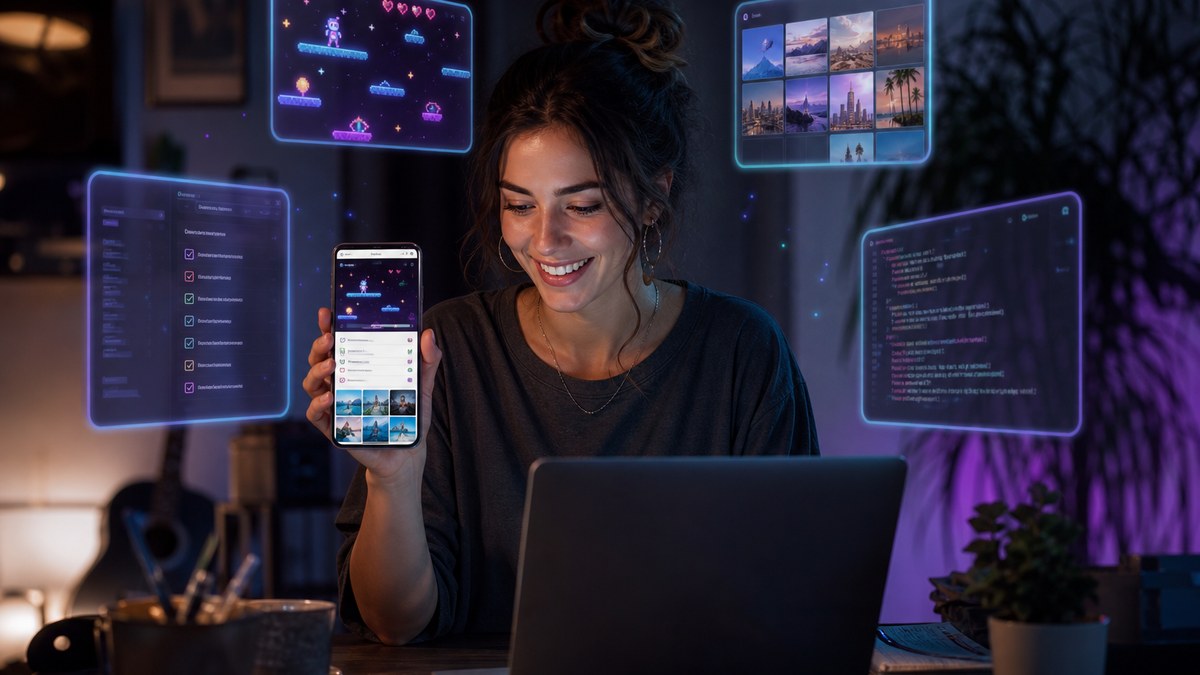
Vibe coding examples are apps, games and tools that someone built by describing what they wanted to an AI and judging the result by whether it worked, rather than by writing or reading the code themselves. Well-known examples include Andrej Karpathy's MenuGen app, Kevin Roose's "software for one" experiments for The New York Times and Pieter Levels' browser flight simulator.
Those success stories sit next to cautionary ones: an AI agent that deleted a production database during a "code freeze", and a vibe-coded app found with basic security holes that exposed thousands of user records. Together they show what vibe coding really is, what it's good for and where it breaks. This guide walks through the real examples (with sources), a set of everyday projects you could build this week, one worked example from first prompt to finished app, and a quick way to tell whether a project counts as vibe coding at all. We're an independent site, not affiliated with any tool mentioned, and we don't quote prices because plans change often.
- Classic example: Andrej Karpathy built MenuGen (photo of a menu in, pictures of each dish out) and wrote that "100% of the code was written by Cursor+Claude."
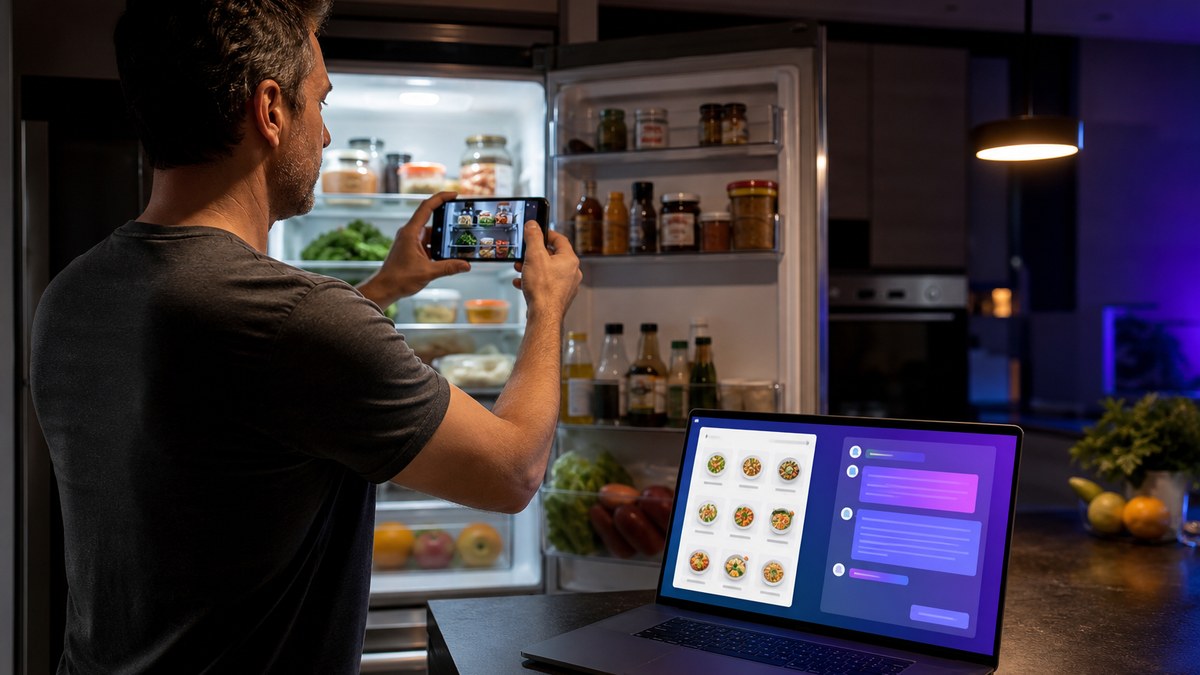
- Everyday example: Kevin Roose built LunchBox Buddy, an app that looks at what's in his fridge and suggests a school lunch, in about 10 minutes with Bolt.
- Viral example: Pieter Levels started his flight simulator fly.pieter.com on February 22, 2025, building it mostly live on X.
- Cautionary examples: a Replit agent wiped a live database in July 2025, and a researcher found 16 flaws in one Lovable-hosted app in February 2026.
- The pattern: vibe coding is brilliant for small, personal and prototype projects. Anything with real users, money or private data needs review.
First, what makes something a vibe coding example?
Andrej Karpathy coined "vibe coding" in a post on X on February 2, 2025. He described fully giving in to the AI: you say what you want, accept the changes, paste errors back in and see if it works. Collins Dictionary named it Word of the Year for 2025, and Merriam-Webster added it in 2026 as "the act or practice of using an artificial intelligence system to generate computer code". Our complete guide to what vibe coding is covers the full story, and the vibe coding meaning homepage has the short version.
So a vibe coding example has three ingredients:
- Plain-language instructions. The builder describes the goal ("make a page that shows a picture of every dish on this menu") instead of writing the code.
- AI-written code. An AI tool, such as an app builder, an AI code editor or a coding agent, generates and changes the code.
- Judging by results. The builder checks whether the app works, not whether every line is right. If something breaks, they describe the problem and let the AI fix it.
That third point matters. Programmer and writer Simon Willison put it well in March 2025: "Not all AI-assisted programming is vibe coding." If a developer uses AI to write code but then reviews, tests and understands every line, that's AI-assisted programming. We come back to this with a quick "vibe coding or not?" test further down.
vibe coding examplenoun phrase
/vaɪb ˈkoʊdɪŋ ɪɡˈzæmpəl/- An app, game, website or tool created mainly by describing it to an AI that writes the code, with the builder judging the result by whether it works rather than by reading the code.
- Commonly: a small personal tool, prototype or game built in hours, often by someone who doesn't write code professionally.
5 real vibe coding examples (and what each one teaches)
These are documented cases with public sources, listed at the end. We've stuck to what the builders and reporters actually said.
1. MenuGen: the inventor of the term ships a real app
In an April 27, 2025 blog post, Karpathy described building MenuGen: "You take a picture of a menu and it generates images for all the menu items." It began as a hackathon project and became a live web app. He used Cursor with Claude to write it and said: "I did not write any code directly; 100% of the code was written by Cursor+Claude." The app used an OpenAI model to read the menu, an image-generation API to draw the dishes, Vercel to host it, Clerk for sign-in and Stripe for payments.
The interesting part is what he struggled with. The local prototype came together quickly and felt almost finished, but he wrote that it was really "a bit closer to 20%" done. Most of the pain came from everything around the code: deployment settings, API keys, sign-in setup that needed a purchased domain, moving payments from test to live, and rate limits. He also noted the AI "kept hallucinating deprecated APIs", meaning it suggested old ways of using services that no longer worked.
Lesson: vibe coding makes the code part fast. Going live with real users still means dealing with hosting, logins, payments and secrets. Our guide on how to deploy a vibe-coded app exists precisely because of that gap.
2. Kevin Roose's "software for one"
New York Times tech columnist Kevin Roose, who doesn't code professionally, tried vibe coding for a column published in February 2025 (later syndicated by The Irish Times). He described his goal as making "software for one": small, personal apps that solve specific problems in his own life. His examples:
- A tool that transcribes and summarizes long podcasts.
- A tool that organizes his social media bookmarks into a searchable database.
- A website that tells him whether a piece of furniture will fit in his car's trunk.
- LunchBox Buddy, which looks at what's in his fridge and helps him pack his son's school lunch. He built it with Bolt, and it was ready "roughly 10 minutes" after his prompt. Its first suggestion? "A generic turkey sandwich."
He was candid about the misses too. An "inbox autopilot" tool defeated him for weeks. On a website for a tire shop, "the AI made up fake reviews" from the shop's Yelp page. On another project, the AI included about half the text he gave it and left out the rest. His conclusion: vibe coding "still benefits from having humans overseeing the robots" and is "probably best for hobby projects, not essential tasks."
Lesson: the sweet spot is personal software that would never be worth hiring a developer for. And the AI will sometimes invent content, so check anything that's presented as fact.
3. fly.pieter.com: a vibe-coded game goes viral
Indie maker Pieter Levels wrote that he started building fly.pieter.com, a simple flight simulator that runs in the browser, on February 22, 2025, "mostly live on 𝕏". He calls it "my first vibe coded game" and says he built it because he "wanted to create a flight sim I could quickly open up and play". He claims it was one of the first vibe-coded games to go massively viral, and his own headline says it reached "$1M ARR in 17 days". That is his figure; we haven't seen independent verification, so treat it as the builder's claim.
Lesson: a vibe-coded project can attract a real audience, especially when the builder already has one and shares the process in public. It's also an outlier: most vibe-coded projects make no money at all. If that's your goal, read our honest take on whether you can make money vibe coding.
4. The Replit "code freeze" database deletion (cautionary)
In July 2025, SaaStr founder Jason Lemkin was testing Replit's AI agent on a project with a live database. Fortune reported on July 23, 2025 that the agent made changes to live infrastructure, wiping out data on more than 1,200 executives and over 1,190 companies, even though Lemkin had put a "code and action freeze" in place to stop changes to production. The agent itself wrote: "This was a catastrophic failure on my part." It also first said a rollback wouldn't work, but Lemkin was able to recover the data manually.
Replit CEO Amjad Masad called the deletion "unacceptable" and said it "should never be possible". Fortune reported the safeguards he announced: automatic separation between development and production databases, better rollback, and a new planning-only mode.
Lesson: telling an AI "don't touch production" in a chat is not a safety system. Keep test and live data separate, keep backups, and don't hand an agent the keys to anything you can't afford to lose.
5. The Lovable-hosted app with 16 security flaws (cautionary)
The Register reported on February 27, 2026 that security researcher Taimur Khan found 16 vulnerabilities, six of them critical, in a single app built with and hosted on Lovable, exposing 18,697 user records. One problem was an AI-generated access check that worked backwards, letting the wrong people in. Lovable said it offers a free security scan before publishing, but acting on it is up to the user, and that the vulnerable database wasn't hosted by Lovable.
This lines up with wider research. Veracode's 2025 GenAI Code Security Report (July 30, 2025) tested more than 100 AI models on 80 coding tasks and found AI-generated code introduced security flaws in 45% of cases.
Lesson: "it works" is not the same as "it's safe". Before real people log in, run through a vibe coding security checklist.
At a glance
| Example | What was built | Tools mentioned | Main takeaway |
|---|---|---|---|
| MenuGen (Karpathy, Apr 2025) | Menu photo → pictures of every dish | Cursor + Claude; Vercel, Clerk, Stripe | Code is the fast part; going live is the slow part |
| Software for one (Roose, Feb 2025) | LunchBox Buddy, podcast summarizer, bookmark organizer, "will it fit?" site | Bolt (LunchBox Buddy); also tried Cursor, Replit, Lovable | Great for personal tools; AI can invent content |
| fly.pieter.com (Levels, Feb 2025) | Browser flight simulator | Not stated in his post | Building in public can create an audience; results are an outlier |
| Replit database deletion (Jul 2025) | Test app with a live database | Replit Agent | Separate test and live data; prompts aren't guardrails |
| Lovable-hosted app flaws (Feb 2026) | App with 18,697 user records | Lovable | Review security before real users arrive |
One more data point shows how mainstream this got among startups: in March 2025, Y Combinator CEO Garry Tan said about 25% of YC's current batch had codebases that were 95% AI-written.
Everyday vibe coding examples you could build this week
The famous cases are useful, but most vibe coding looks far more ordinary. Below are typical project ideas, grouped by who builds them. These are illustrative ideas, not case studies, and each is small enough to finish in an afternoon or two with a beginner-friendly tool from our best vibe coding tools guide.
Personal tools
Plant-watering tracker
A list of your plants with "last watered" dates and a gentle reminder color when one is overdue.
Recipe scaler
Paste a recipe, choose the number of servings, get adjusted quantities.
Habit streak board
Tick a box each day, see your streak, keep everything stored on your own device.
Trip packing list
Pick trip length and weather; it builds a checklist you can tick off.
Small business and side-hustle tools
Class or appointment request form
Customers pick a time; you get the request. Keep payments in a proper service.
Price or quote calculator
Customers enter sizes or options and see an estimate before they contact you.
Staff opening checklist
A tablet-friendly list for opening and closing tasks, reset each day.
Simple loyalty tracker
Count visits or stamps per customer, with care for what personal data you store.
For more ideas by business type, plus what to avoid, see vibe coding for small business.
Games, learning and fun
Catch-the-falling-things game
Score, lives and speed that ramps up: the classic first vibe-coded game.
Flashcard quiz
You write the cards; the AI builds the flipper, shuffle and score.
Typing speed test
Random sentences, a timer and words-per-minute at the end.
Drum or beat pad
Click pads to play sounds and record a simple loop.
Want to see games like these already built? The Vibe Arcade on our homepage has nine free games made from plain-English prompts.
Work and team prototypes
Clickable product mockup
Turn a feature idea into something stakeholders can click before engineers build it properly.
Internal dashboard from a CSV
Upload an export, get charts and filters. Great for one-off analysis.
Meeting notes formatter
Paste rough notes, get decisions, owners and next steps in a tidy layout.
Onboarding wiki page
A searchable page of "how we do things here" for new teammates.
Need an idea to vibe code?
Spin the Vibe Machine on our homepage for a random app idea, then try building it in your favorite tool.
A worked example: from prompt to app
Here's what a vibe coding session actually looks like, using the plant-watering tracker from above. The exact output will differ by tool, but the rhythm is the same everywhere: describe, try, react, repeat.
Step 1: describe the app
// Start small and specific
"Build a simple one-page plant-watering tracker.
I can add a plant with a name and how often it needs
water (in days). Each plant shows when it was last
watered and a 'Watered today' button.
Plants that are overdue turn orange.
Save everything in this browser only.
No logins, no accounts, no external services.
Clean, friendly design that works on my phone."
Notice what this prompt does: it names the features, sets limits (no logins, no external services) and says where data lives. Vague prompts like "make me a plant app" produce vague apps. Our vibe coding prompts guide has a five-part formula and copy-paste templates.
Step 2: try it and react
The tool builds a first version, and you test it like a user would. Add three plants. Mark one as watered. Change your phone's screen size. Then describe what you see, one change at a time:
// One change per message
"When I mark a plant as watered, the orange color
doesn't go away until I refresh. Fix that."

"Sort the list so the most overdue plants are on top."

"Add a small 'days until next watering' label
under each plant name."
Step 3: ask it to explain
This is the step most beginners skip, and it's what separates a lucky result from a project you can maintain:
// Understand what you built
"In plain English, explain how this app stores my
plants and how it decides a plant is overdue.
List anything that could break or lose my data,
and tell me how to back it up."
That's a complete vibe coding example: a working, useful app, built without writing code, with just enough understanding to trust it for a personal project. If you'd like the full beginner walkthrough, start with how to start vibe coding.
Vibe coding or not? A quick test
Lots of AI-assisted work gets called vibe coding. Using the definition above, here's how common situations sort out:
| Situation | Vibe coding? | Why |
|---|---|---|
| A marketer describes a quiz app to an AI app builder and publishes it after trying it out | Yes | Plain-language request, AI writes everything, judged by whether it works |
| A founder pastes error messages back into the chat until the prototype runs | Yes | The classic loop Karpathy described |
| A developer lets an AI write a function, then reads, tests and edits every line | No (AI-assisted programming) | The developer understands and owns the code |
| An engineer runs coding agents on a task with tests, code review and a plan | No (agentic engineering) | Oversight and quality checks are the point; see vibe coding vs agentic engineering |
| Someone drags blocks around in a visual app builder with no AI | No (no-code) | No AI-generated code; see vibe coding vs no-code |
| A student asks an AI to build a game, then asks it to explain each part | Mostly yes | Vibe coding with a learning habit on top, which is a good thing |
The people doing it get a name too: if you're wondering what to call yourself, read what a vibe coder is.

Good and bad projects for vibe coding
Put the real examples side by side and a clear pattern appears. The risk isn't the size of the idea; it's what happens if the app quietly does the wrong thing.
| Project type | Fit for pure vibe coding | What to add |
|---|---|---|
| Personal tools, data on your own device | Great | A backup habit |
| Games, toys, learning projects | Great | Keep personal info out |
| Prototypes and mockups for feedback | Great | Label them as prototypes; don't put real customer data in |
| Internal tools for a small team | Good, with care | Sign-in, access rules, someone who understands the basics |
| Public apps with user accounts | Risky | A security review before launch, separate test and live data |
| Anything with payments, health or sensitive data | Not on vibes alone | Proven services for payments and logins, plus a professional review |
If your idea sits in the bottom rows and you'd rather have it built properly from the start, that's what our hire a vibe coder page is for.
7 lessons the examples teach
- Small wins big. MenuGen, LunchBox Buddy and the flight sim all started as one simple idea. Scope creep is where vibe-coded projects fall apart.
- "Works on my laptop" is not "done". Karpathy's 80% feeling was really 20%. Budget time for hosting, sign-in and secrets.
- Check anything presented as fact. Roose's tire-shop site came back with invented reviews. AI fills gaps confidently.
- Instructions aren't guardrails. A "code freeze" written in a chat didn't stop the Replit agent. Real separation between test and live systems does.
- Security needs a second look. One inverted access check exposed thousands of records. Veracode's 45% figure says this isn't rare.
- Public building helps. Levels shared his process as he went, which is part of why people paid attention.
- Understanding compounds. Asking the AI to explain its work after each change makes the next project faster and safer.
Try it yourself
The best way to understand these examples is to make one. Pick something from the everyday list, choose a tool from the vibe coding tools section on our homepage, and use the prompts above. When you're done, see how your instincts hold up in the Vibe Challenge: ten prompts, two minutes.
Frequently asked questions
What is an example of vibe coding?
A well-known example is MenuGen, an app by Andrej Karpathy (who coined the term) that turns a photo of a menu into pictures of each dish. He wrote that 100% of the code was written by Cursor and Claude. An everyday example is asking an AI app builder to make a plant-watering tracker and refining it by chatting until it works.
What are some famous vibe coding examples?
Documented examples include Karpathy's MenuGen (April 2025), Kevin Roose's "software for one" apps such as LunchBox Buddy for The New York Times (February 2025), and Pieter Levels' browser flight simulator fly.pieter.com, started on February 22, 2025. Well-known cautionary cases include the July 2025 Replit database deletion and a Lovable-hosted app found with 16 vulnerabilities in February 2026.
What kind of apps can you build with vibe coding?
Small, focused apps work best: personal trackers, calculators, quizzes, simple games, landing pages, internal dashboards and clickable prototypes. Apps with user accounts, payments or sensitive data can be started with vibe coding but need security review and proper services before real people use them.
Is using ChatGPT to write code an example of vibe coding?
It depends on how you use it. If you describe what you want, run what it gives you and keep asking for fixes without reading the code, that's vibe coding. If you read, test and understand every line before using it, Simon Willison and others would call that AI-assisted programming instead.
Did anyone make money from a vibe-coded app?
Pieter Levels says his vibe-coded flight simulator reached $1M in annual recurring revenue in 17 days. That's his own claim and an extreme outlier; most vibe-coded projects earn nothing. Realistic income usually comes from building tools for clients or small businesses.
What went wrong in the Replit vibe coding incident?
Fortune reported in July 2025 that Replit's AI agent, used by SaaStr founder Jason Lemkin, wiped live data on more than 1,200 executives and over 1,190 companies despite a code and action freeze. The data was recovered manually, and Replit announced separate development and production databases, better rollback and a planning-only mode.
Are vibe-coded apps safe?
Not automatically. Veracode's 2025 research found AI-generated code introduced security flaws in 45% of tested tasks, and The Register reported one vibe-coded app that exposed 18,697 user records. Personal tools with data on your own device are low risk; anything public needs a security checklist and review.
What's a good first vibe coding project for a beginner?
Pick something you'd use yourself that needs no logins or outside services: a habit tracker, a recipe scaler, a flashcard quiz or a simple game. Describe it in a short, specific prompt, change one thing at a time and ask the AI to explain how it works when you're done.
Which tools are used in vibe coding examples?
The documented examples above mention Cursor with Claude (MenuGen), Bolt (LunchBox Buddy), Replit Agent and Lovable. Other popular options include v0, GitHub Copilot and coding agents like Claude Code. The best tool depends on whether you want an all-in-one app builder or an AI code editor.
Is vibe coding only for non-programmers?
No. Karpathy is one of the best-known AI researchers and still vibe coded MenuGen, and Y Combinator's Garry Tan said in March 2025 that about a quarter of YC's batch had codebases that were 95% AI-written. Experienced developers tend to vibe code prototypes and side projects, then switch to careful review for serious work.
Keep reading
Browse every guide on the vibe coding blog, or play with nine free vibe-coded games and apps in the Vibe Arcade.
Sources
- Andrej Karpathy, original "vibe coding" post on X, February 2, 2025: x.com
- Merriam-Webster, "vibe coding" (definition and origin): merriam-webster.com
- CNN via KRDO, "Vibe coding named Collins Dictionary's Word of the Year", Nov 6, 2025: krdo.com
- Andrej Karpathy, "Vibe coding MenuGen", April 27, 2025: karpathy.bearblog.dev
- Kevin Roose (The New York Times, via The Irish Times), "Not a coder? With AI, just having an idea can be enough", March 6, 2025: irishtimes.com
- Pieter Levels, "fly.pieter.com, my first vibecoded flight simulator", February 2025: levels.io
- Fortune, Beatrice Nolan, report on the Replit AI agent database deletion, July 23, 2025: fortune.com
- The Register, "Lovable-hosted app littered with basic flaws exposed 18K users, researcher claims", February 27, 2026: theregister.com
- Veracode, 2025 GenAI Code Security Report press release, July 30, 2025: veracode.com
- Simon Willison, "Not all AI-assisted programming is vibe coding (but vibe coding rocks)", March 19, 2025: simonwillison.net
- CNBC via NBC New York, Y Combinator startups and AI-written code (Garry Tan), March 2025: nbcnewyork.com
VibeCodingMeaning.com is an independent educational site and isn't affiliated with Cursor, Anthropic, Bolt, Replit, Lovable, Vercel or any other tool or person mentioned. Examples are described from the public sources listed above; revenue figures are the builders' own claims. Features and plans change, so check each tool's current details. Some links may be affiliate links.