Vibe Coding Jobs in 2026: How to Get Paid to Build with AI
Companies are hiring people who can ship fast with AI. Here's how to turn your vibe coding skills into a career.

A year ago, "vibe coding" wasn't even a phrase. Today, it's appearing in job descriptions.
The rise of AI-powered development has created something unexpected: an entirely new category of jobs for people who can effectively direct AI to build software. Companies need people who can ship fast, iterate quickly, and turn ideas into working products without getting stuck in implementation details.
If you've been vibe coding for fun, it might be time to get paid for it.
This guide covers the real job opportunities emerging in 2026, what they pay, what skills you need, and exactly how to land your first role.
The New Job Titles
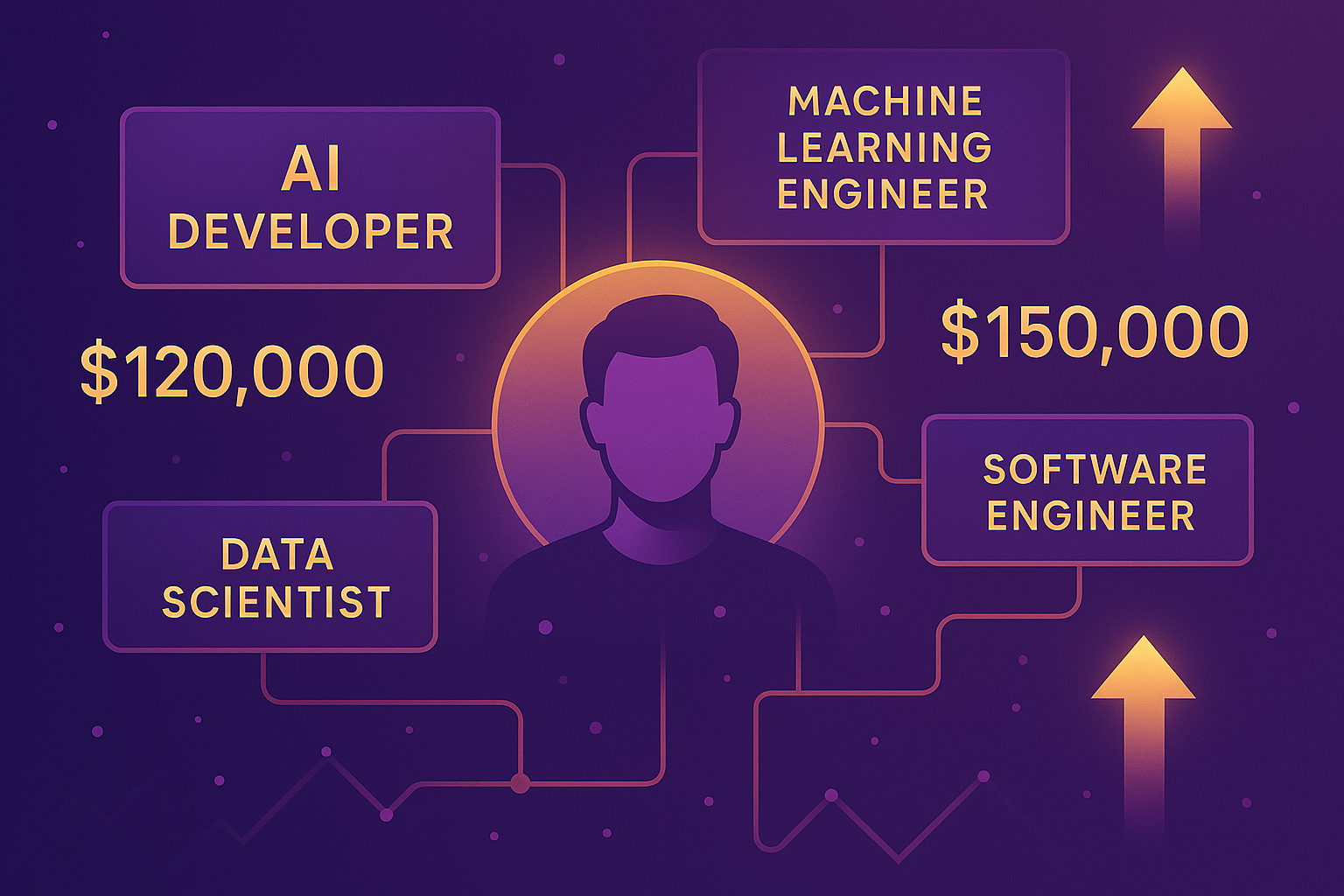
Companies don't always call it "vibe coding" in job postings—yet. But the roles are real, and they're growing fast. Here are the main job categories:
🚀 AI Developer / AI-Assisted Developer
$90K – $160KThe most common title. You build products using AI coding tools as your primary workflow. Expected to ship 3-5x faster than traditional development timelines.
- Rapid prototyping and MVP development
- Full-stack development with AI assistance
- Tool proficiency: Claude, Cursor, Copilot
💬 Prompt Engineer
$80K – $150KSpecialized in crafting effective prompts for AI systems. Often works across coding and non-coding use cases. High demand at AI companies and enterprises adopting AI tools.
- Develop and optimize prompts for development workflows
- Create prompt libraries and templates for teams
- Train other developers on effective AI communication
⚡ Rapid Prototyper / Innovation Developer
$85K – $140KBuilds proof-of-concepts and prototypes at startup speed. Common at innovation labs, R&D departments, and agencies that need to validate ideas quickly.
- Turn concepts into working demos in days, not weeks
- Validate product ideas before full development investment
- Work closely with product and design teams
🎯 AI Product Builder
$100K – $180KHybrid role combining product thinking with technical execution. You own features end-to-end: ideation, building, shipping, and iterating based on user feedback.
- Full ownership of product features
- Direct user research to shipped product
- Combines PM skills with vibe coding execution
🔧 AI Integration Specialist
$95K – $155KHelps companies adopt AI development tools. Trains teams, builds internal tooling, and creates workflows that leverage AI effectively across the organization.
- Evaluate and implement AI coding tools
- Develop best practices and training materials
- Measure and improve team productivity with AI
💼 Freelance Vibe Coder
$75 – $200+/hourIndependent contractor who builds MVPs, prototypes, and small products for clients. Growing market as startups and non-technical founders seek fast, affordable development.
- MVP development for startups
- Landing pages and marketing sites
- Internal tools and automations
- Prototype-to-pitch deck turnarounds
Salary Overview
Here's what vibe coding roles are paying in 2026, based on job postings and industry data:
| Role | Entry Level | Mid Level | Senior |
|---|---|---|---|
| AI Developer | $90K | $125K | $160K+ |
| Prompt Engineer | $80K | $115K | $150K+ |
| Rapid Prototyper | $85K | $110K | $140K+ |
| AI Product Builder | $100K | $140K | $180K+ |
| AI Integration Specialist | $95K | $125K | $155K+ |
| Freelance (hourly) | $75/hr | $125/hr | $200+/hr |
Note: These ranges are for US-based roles. Remote positions from other regions may vary. Startup equity can significantly increase total compensation.
Skills That Get You Hired
Forget the traditional "5 years of React experience" requirements. Vibe coding jobs prioritize a different skill set:
AI Tool Proficiency
Deep familiarity with Claude, Cursor, Copilot, Bolt.new, and similar tools
Clear Communication
Ability to articulate requirements precisely—prompting is a communication skill
Code Literacy
You don't write every line, but you need to read, understand, and debug
Product Sense
Understanding what to build matters as much as how to build it
Rapid Iteration
Comfort with fast feedback loops and continuous improvement
Systems Thinking
Ability to architect solutions and see how pieces fit together
💡 The Skill That Matters Most
Above all else, employers want to see shipped projects. A portfolio of 5 working products you built with AI beats any certification or credential. The ability to go from idea to deployed product is the core skill.
How to Land Your First Vibe Coding Job
Here's a practical roadmap to go from vibe coding hobbyist to paid professional:
Build Your Portfolio (2-4 weeks)
Create 3-5 real projects using vibe coding. These should be deployed and functional—not just code in a repo. Ideas: a SaaS landing page, a productivity tool, an API integration, a data dashboard. Document your process.
Document Your Workflow
Write case studies or create videos showing how you built each project. Employers want to see your process: how you prompt, how you iterate, how you debug. This demonstrates your actual working style.
Build in Public
Share your work on X/Twitter, LinkedIn, or a blog. Tag your projects with #VibeCoding. The community is small but growing—visibility matters. Many vibe coding jobs come through network connections, not job boards.
Start Freelancing
Take on small projects to build credibility and testimonials. Offer to build MVPs for startup founders. Price competitively at first—you're building a track record. Platforms like Upwork now have AI development categories.
Target the Right Companies
Look for: early-stage startups (speed matters most), innovation teams at larger companies, agencies and consultancies, AI-native companies, and any job posting mentioning "rapid prototyping" or "AI-assisted development."
Where to Find Vibe Coding Jobs
These platforms and communities are where vibe coding opportunities appear:
Search terms that work: "AI developer," "rapid prototyping," "AI-assisted development," "prompt engineer," "MVP developer," "Cursor," "build fast."

Freelance vs Full-Time: Which Path?
Both paths are viable. Here's how to choose:
🏢 Go Full-Time If:
• You want stable income and benefits
• You prefer working on larger, longer-term projects
• You want to learn from a team
• You're early in your career and building skills
💼 Go Freelance If:
• You want flexibility and variety
• You can handle inconsistent income
• You enjoy client relationships and sales
• You want to build toward your own products
Many successful vibe coders do both: a part-time role or retainer client for stability, plus freelance projects for variety and upside.
The Career Trajectory
Where does a vibe coding career lead? Here are common paths:
Technical Track: AI Developer → Senior AI Developer → AI Architect → CTO of AI-native startup
Product Track: AI Product Builder → Product Lead → VP Product → Founder
Consulting Track: Freelancer → Agency Owner → AI Transformation Consultant
Creator Track: Build in public → Audience → Info products → SaaS founder
The common thread: vibe coding skills compound. The faster you can build, the more opportunities you can pursue.
Ready to Start Building?
Generate your first project idea with The Vibe Machine and start building your portfolio today.
Launch The Vibe MachineWhat Companies Actually Want
After talking to dozens of hiring managers, here's what actually matters in vibe coding interviews:
- Live building sessions — Many interviews include building something in real-time with AI tools. Practice this.
- Portfolio depth — They want to see your actual projects, deployed and working. Code quality matters less than shipping.
- Process explanation — Can you articulate how you approach problems? How do you decide what to build? How do you debug?
- Speed benchmarks — How fast can you go from spec to working prototype? Some companies test this explicitly.
- Collaboration signals — Can you work with designers, PMs, and other developers? Vibe coding isn't solo work.
The Bottom Line
Vibe coding jobs are real, they pay well, and they're growing fast. The barrier to entry is lower than traditional development—but the expectations are different. You're judged on output and speed, not credentials and years of experience.
If you can ship, you can get hired.
The best time to start building your portfolio was six months ago. The second best time is today.
Landing a vibe coding job? Share your story on X @vibecodemeaning.
Frequently Asked Questions
Can you get a job with vibe coding skills?
Yes. Companies are actively hiring for roles that leverage AI-assisted development. Job titles include AI Developer, Prompt Engineer, Rapid Prototyper, and AI Product Builder. Both startups and enterprises need people who can ship fast using AI tools.
How much do vibe coding jobs pay?
Salaries vary by role and experience. AI Developers earn $90K-$160K, Prompt Engineers $80K-$150K, and AI Product Builders $100K-$180K. Freelance vibe coders charge $75-$200+ per hour depending on project complexity.
Do I need a computer science degree for vibe coding jobs?
No. Many vibe coding roles prioritize demonstrated skills over formal education. A strong portfolio of shipped projects, understanding of AI tools, and ability to communicate clearly matter more than degrees.
What skills do I need for a vibe coding career?
Key skills include proficiency with AI coding tools (Claude, Cursor, Copilot), clear communication and prompt writing, basic programming literacy, product thinking, and the ability to iterate quickly based on feedback.
Is vibe coding a real career or just a trend?
Vibe coding represents a lasting shift in software development. As AI tools improve, the demand for people who can effectively direct AI to build software will only increase. It's not replacing traditional development—it's creating new roles alongside it.
About the author: This guide was created by the Vibe Coding community to help people turn their AI building skills into careers. Have questions or a success story? Reach out to us.